

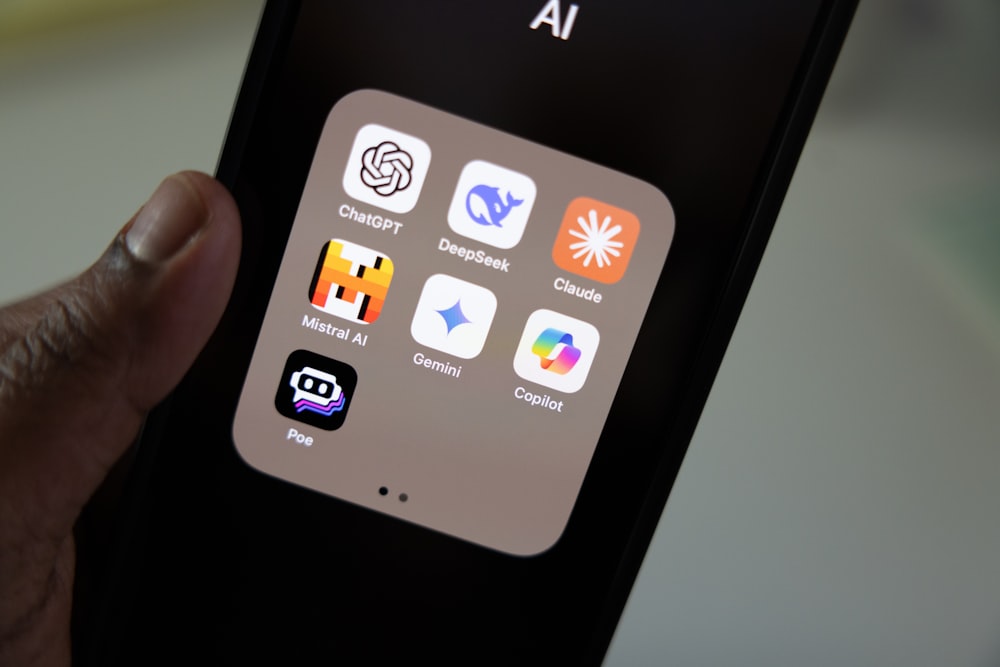
For digital marketers, the last two decades have been defined by a single obsession: ranking on Google. But as we settle into the AI era, the battlefield has shifted. The question is no longer just "Where do I rank?" but rather "Who does the AI think I am?"
Among the titans of Large Language Models (LLMs), Anthropic’s Claude (specifically the Claude 3.5 Sonnet and Opus models) has emerged as the distinct favorite for professionals, developers, and researchers. Unlike ChatGPT, which often leans into creative flair, Claude is prized for its reasoning capabilities, coding prowess, and—crucially for brands—its nuance.
But here lies the challenge: Claude currently has no direct advertising platform. You cannot bid on keywords, and you cannot buy a "sponsored" answer.
So, how do you make your brand show up in Claude’s answers? The answer lies in a new discipline known as Generative Engine Optimization (GEO).

The Shift from SEO to GEO
To understand how to influence Claude, you must first understand how it differs from a search engine. Google retrieves links; Claude retrieves concepts and synthesizes answers based on probability and training data.
When a user asks Claude, "What is the best CRM for a small enterprise agency?", the model doesn't just look for the page with the most backlinks. It looks for the entity that semantically correlates most strongly with the concepts of "reliability," "enterprise," and "agency workflows" within its massive training corpus.
This requires a shift in strategy from Search Engine Optimization (SEO) to Generative Engine Optimization (GEO).
1. The "Constitutional" Factor
Anthropic builds Claude on "Constitutional AI" principles—focusing on being helpful, harmless, and honest. Unlike other models that might hallucinate to please a user, Claude is tuned to be cautious.
Actionable Insight: Claude de-prioritizes marketing fluff. To appear in its answers, your brand content must be factual, dense, and objective. If your website is filled with unverifiable superlatives ("We are the #1 best platform on earth"), Claude is statistically less likely to cite you as a definitive source compared to a competitor whose content reads like a white paper.
Strategies to Penetrate the "Context Window"
Since you cannot buy your way in, you must earn your way into the training data and the retrieval paths (RAG - Retrieval-Augmented Generation).
2. Digital PR and Authority Co-Occurrence
LLMs learn through association. If your brand name frequently appears alongside established industry terms and other authority figures in high-trust domains, Claude learns to associate you with that sector.
For example, if you are a fintech startup, appearing in a TechCrunch article or a Gartner report discussing "Future Payment Solutions" is infinitely more valuable for GEO than appearing on 50 low-quality blogs.
The Strategy:
- Podcast Transcripts: Claude ingests vast amounts of text. Sponsoring or appearing on niche, high-authority podcasts (which have transcripts online) is a high-yield strategy.
- Comparisons and "Best Of" Lists: LLMs often synthesize answers from aggregator sites (G2, Capterra, Reddit threads). Ensure your presence there is optimized with specific feature keywords, not just generic praise.

3. Optimizing for "Information Density"
Recent research into GEO suggests that LLMs prefer content that is "information dense." They favor structures that look like data rather than prose.
To increase the likelihood of Claude citing your technical documentation or blog:
- Use Structured Data: Heavy use of tables, bullet points, and clear headers.
- Cite Sources: Ironically, citing other authorities increases your own authority score in the eyes of the model.
- Answer the "Why" and "How": Don't just state a fact; explain the reasoning. Claude 3.5 Sonnet excels at reasoning, so it gravitates toward content that mirrors that logic chain.
The Role of Brand Mentions and Sentiment
In the traditional SEO world, an unlinked mention was useless. in the GEO world, brand mentions are currency.
If thousands of users on Reddit and Stack Overflow discuss your SaaS tool in the context of "solving X problem," Claude picks up on this pattern. It doesn't need a backlink; it needs the semantic connection.
4. The "Reddit" Effect
Most major LLMs, including Claude, have heavily trained on Reddit data. It represents authentic human dialogue.
Actionable Advice:
- Monitor your brand sentiment on Reddit.
- Engage authentically. Do not spam. If your brand is consistently recommended by "real humans" in threads about specific problems, Claude will begin to output your brand as the solution to those problems in its private chats.
Why You Can't Ignore the "Ad-Free" Platforms
You might ask: "Why bother optimizing for Claude if I can't track ROI directly?"
The answer is user intent. The users querying Claude are often high-intent decision-makers—developers, executives, and researchers—who are looking for synthesized answers, not a list of blue links. If you are absent from this conversation, you are invisible to the most valuable demographic in tech.
However, relying solely on organic visibility in LLMs is a slow game. This is where a hybrid strategy becomes essential.

The Hybrid Approach: Capture the Audience Where They Live
While you play the long game of training Claude to recognize your brand, you need to capture the demand that exists now. The users asking questions on Claude are the same users scrolling LinkedIn, reading industry news, and searching Google.
This is where Nex.ad bridges the gap.
Automating the "Land Grab"
We are in a transitional period. Users use AI for research, but they still exist on traditional ad platforms. To effectively market in 2026, you need to surround the user.
Nex.ad allows you to deploy high-performance, autonomous advertising campaigns across the platforms that do accept ads—Google, Meta, LinkedIn, and emerging programmatic channels.
By using Nex.ad’s AI to optimize your ad spend and creative targeting:
- You build the Brand Recall: When a user sees your ad on LinkedIn and then asks Claude about solutions in your industry, that "mental availability" makes them more likely to prompt Claude specifically about your brand.
- You Capture the Spillover: Users often verify Claude's answers with Google searches. Nex.ad ensures that when they do that verification search, your paid placement is waiting for them.
- Efficiency: While you spend human hours crafting high-level GEO content strategies for Claude, Nex.ad’s autonomous agent handles the daily grind of bid management and A/B testing on paid channels.
Conclusion: The Answer is "Relevance"
Making your brand show up in Claude answers isn't about gaming an algorithm—it's about becoming the undeniable answer. It requires building deep, authoritative content and genuine community consensus.
But while you build that organic authority, don't leave your revenue to chance. Use Nex.ad to dominate the paid landscape, ensuring that whether your customer is asking an AI or searching the web, your brand is the first thing they see.
Ready to automate your ad performance? Start your Nex.ad journey today.


